

A home dehumidifier is a powered room appliance, not a disposable closet absorber. Decide from placement, tank access, local power compatibility and upkeep rather than a broad performance promise.
Sketch the placement
Measure the floor area, nearby furniture, outlet location and room needed to remove the tank. Follow the maker's clearance and operating-condition instructions; an advertised room area is not a guaranteed result.
Test the tank routine
Picture lifting, carrying, emptying and reinstalling the tank. Do not improvise drainage, wiring or an installation method that the manufacturer does not document.
Review controls and maintenance
Check accessible controls, cleaning steps, filters and where the correct replacement parts can be obtained. An air purifier or portable air conditioner is not automatically a dehumidifier.
Verify power requirements
Confirm voltage, plug, cord and local-use guidance for the exact model. Do not recommend electrical adaptation based only on a listing photo.
Keep postponing as an option
Retaining suitable equipment or delaying a purchase is reasonable when placement or maintenance is unclear. Avoid health, mould-removal, sterilization, drying, noise and energy-saving promises.
Product examples and what to verify
Electric room appliance example
Each card is a current catalog example, not a ranking. Verify the exact variant, dimensions, package contents, labels and checkout details.
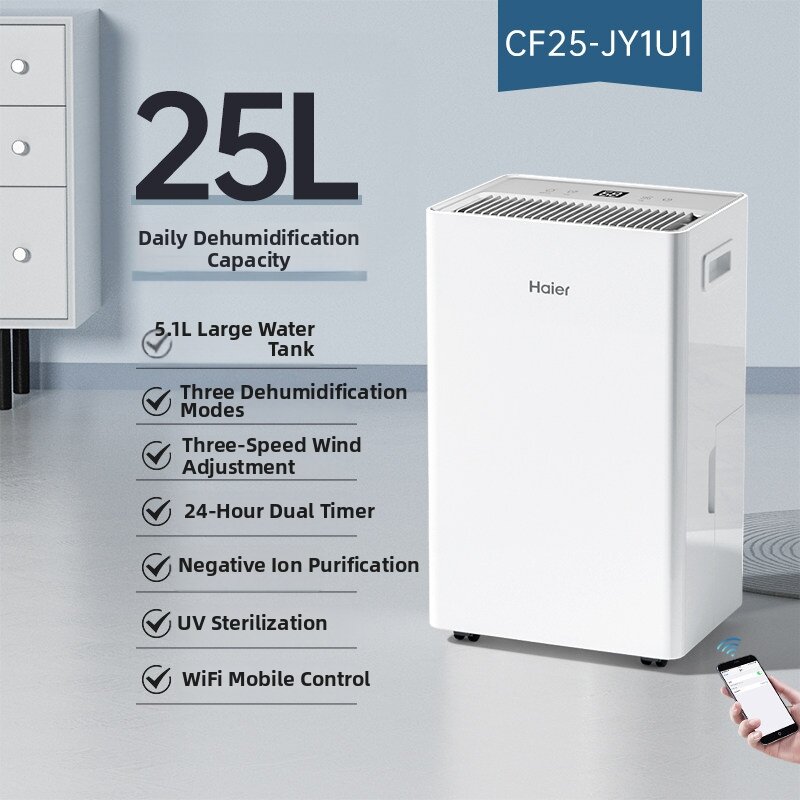
Browse more current options
Catalog pages help you compare current listings; they are not endorsements of every result. dehumidifier; home dehumidifier; room dehumidifier
Before checkout
Confirm exact dimensions, clearances, power, tank access, maintenance, filters and replacement parts. Treat extraction and area figures as specifications to verify, not guarantees.


