


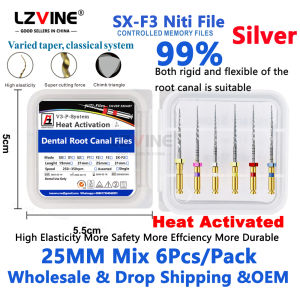
Dental Root Canal File Heat-Activated Rotary Nitinol Tooth Blue Files 25mm Thermally Activated Nickel-Titanium odontologia SX-F3
V3-P-G (SX-F3) Series Thermally Activated NiTi Rotary Root Canal File System(Gold / Blue / Silver / Rainbow coatings available)Neutral packaging supported, custom private labels can be affixed, OEM orders acceptableCost-Effective & Practical: V3-P-G (SX-F3) NiTi File SystemThe V3-P-G (SX-F3) series rotary files are domestically manufactured thermally activated NiTi instruments featuring outstanding safety and cost performance. Delivering reliable performance at competitive prices, they serve general dental practitioners and stand as a trustworthy choice for routine root canal shaping.Thermally Activated NiTi Rotary Endodontic Files1. Product OverviewThermally activated NiTi rotary files represent a new generation of root canal shaping instruments. Fabricated from specially heat-treated CM Wire nickel-titanium alloy, their mechanical properties shift drastically with temperature, delivering drastically enhanced flexibility and superelasticity. They enable safer, more efficient canal preparation while faithfully following the original anatomical contour of root canals. Leveraging the material’s thermodynamic phase transformation, they comprehensively boost clinical safety and anatomical adaptability.2. Basic Product SpecificationsProduct Name: V3-P-G (SX-F3) Series Rotary Shaping FilesAvailable Sizes & Lengths19 mm: SX21 mm: S1, S2, F1, F2, F3, F4, F5, SX-F3 assorted packs25 mm: S1, S2, F1, F2, F3, F4, F5, SX-F3 assorted packs31 mm: S1, S2, F1, F2, F3, F4, F5, SX-F3 assorted packsCore MaterialMedical-grade nickel-titanium alloy; upgraded variants adopt M-Wire and gold thermal activation technology, offering exceptional elasticity, cyclic fatigue resistance and fracture resistance. The convex triangular cross-section delivers efficient cutting and smooth debris removal. A modified non-cutting guiding tip improves operational safety.Key AdvantagesProgressive multi-taper design: Each file shapes a designated canal segment to avoid over-cutting and ledge formation.Complete canal preparation with only 3–5 files, streamlining clinical workflow and boosting treatment efficiency.Uniform canal shaping facilitates irrigation and obturation with warm gutta-percha or cold lateral condensation, significantly raising root canal treatment success rates.Superior flexibility accommodates curved, narrow, calcified and other complex root canals for wide clinical applicability.3. Progressive Multi-Taper Parameter BreakdownThe series features gradual variable tapers with distinct dimensional and taper specifications for each file:SX: Total length 19 mm, 9 mm working portion; 9 progressive tapers from D0 to D9. For coronal flaring and pre-enlargement of upper canal segments.S1: 14 mm working length, 12 progressive tapers; D0 tip diameter 0.17 mm, taper range 0.04–0.11. Shapes the coronal one-third of canals.S2: 14 mm working length, 9 progressive tapers; D0 tip diameter 0.20 mm, taper range 0.04–0.11. Shapes the middle one-third of canals.F1: D0 0.20 mm, constant 7% taper; finishes apical preparation to size #20.F2: D0 0.25 mm, constant 8% taper; primary master apical file, finishes apical preparation to size #25.F3: D0 0.30 mm, constant 9% taper; for large canals, finishes apical preparation to size #30.F4 / F5: High-taper finishing files for oversize apical foramina and retreatment cases.4. Taper Selection & Tooth Matching GuideFile ModelIndicated TeethCanal TypeMatching Gutta-Percha Point RecommendationSXAll teethNarrow canal orifices, dentinal shoulders, obstructed accessN/A (Coronal pre-flaring only)S1Anteriors, premolars, molarsStraight canals, coronal segments of curved canalsN/A (Shaping file)S2Primarily premolars & molarsNarrow mid-canals, moderately curved canalsN/A (Shaping file)F1Anteriors, narrow posterior canalsSlender canals, immature permanent teeth, fine curved canals#20 0.02 taper GP pointsF2Primary choice for all teethMost routine canals, moderately curved canals (clinically preferred)#25 0.02 / 0.04 taper GP pointsF3 / F4 / F5Primarily molarsLarge canals, open apices, root canal retreatmentMatching sized GP pointsSupplementary Selection PrinciplesShort canals (Calcified / obliterated canals: Sequential pre-flaring with SX + S1; never advance large files directly to the apex.Curved canals (15°–35°): Prioritize F1 / F2; NiTi elasticity conforms naturally to original canal curvature.5. Standard Clinical Protocol (Hand & Rotary Use Compatible)(1) Preoperative PreparationRequired Instruments & Materials: Rubber dam, diamond burs, size #10–#15 stainless steel K-files, sodium hypochlorite irrigant, EDTA lubricating gel, ProTaper series files.Access cavity preparation: Complete standard access, thoroughly irrigate the pulp chamber. Scout canals with #10 / #15 K-files to establish initial glide paths.Working length determination: Maintain slight canal moisture and dry pulp chamber; confirm accurate working length via apex locator and radiographs. Prevent files from contacting lips, tongue or unrelated instruments.(2) Full Sequential Shaping StepsGlide path establishment: Advance #10 / #15 K-files to estimated working length. If #15 K-file cannot reach the apex, use SX + S1 to straighten the coronal one-third of the canal.Coronal shaping: Use S1 to gently prepare the coronal third; do not penetrate deeper than the reach of the #15 K-file. Retract immediately upon resistance.Intermittent irrigation: Alternate sodium hypochlorite and EDTA irrigation to flush dentinal debris.Mid-canals shaping: Use S2 to prepare the middle third with short amplitude rotary pecking motions; irrigate thoroughly afterward.Initial apical shaping: Advance F1 to full working length to harmonize mid-apical canal geometry.Final apical shaping: For routine cases, shape to full working length with F2; fit #25 gutta-percha point to confirm adequate size prior to obturation.Advanced finishing: If #25 GP point extrudes beyond the apex, complete apical refinement with F3; use F4 / F5 sequentially for widely open apical foramina.(3) Core Operational Rules & File Fracture PreventionCutting technique: Allow rotary motion to perform cutting; limit rotation to 1/4–1/2 turns per insertion. Never apply forced apical pressure.Resistance management: Upon binding or increased drag, reverse rotation to withdraw the file, clear debris and resume shaping.Depth control: Each file must reach the predetermined working length. Irrigate copiously between every file change.File binding resolution: If the file locks within the canal, slowly reverse rotation for removal; do not pull forcefully.6. Additional Clinical TipsNarrow canal orifices with triangular dentinal shoulders: Combine SX and S1 for orifice refinement; SX penetration depth shall not exceed S1.Rotary motor parameters: Recommended speed 250–300 rpm, torque 1.5–2.0 N·cm in continuous rotation mode.Obturation matching: Cold lateral condensation pairs with 0.02 taper GP points; warm vertical obturation optimally uses 0.04 taper GP points.7. Representative Clinical CasesCase 1: Routine Posterior Canal (Primary F2 Application)Patient: 38-year-old, acute pulpitis of mandibular first molar; regular canal anatomy, mild 20° distal root curvature.Treatment ProcedureRubber dam isolation; scout and confirm working length with #10 / #15 K-files post access preparation.Coronal flaring with SX → coronal shaping with S1 → mid-canal shaping with S2; irrigation and lubrication after each step.Refine upper apical segment with F1, complete final apical shaping using 25 mm F2 file.Verify fit with #25 0.04 taper gutta-percha; ultrasonic final irrigation followed by warm vertical obturation.Outcome: Intact canal contour without transportation or ledging; dense obturation, no postoperative pain, stable periapical status at follow-up.Case 2: Slender Calcified Canals (Combined F1 + F2 Protocol)Patient: 45-year-old, chronic periapical periodontitis of maxillary lateral incisor; narrow canals with mild coronal calcification.Treatment ProcedureSequential negotiation with small-size K-files; slowly expand calcified coronal segments using SX + S1.Refine mid-canal with S2, establish basic apical geometry with F1, final fine shaping with F2.Frequent irrigation throughout to avoid debris impaction and blockage.Outcome: Full patency restored through calcified segments, uniform canal wall cutting, tight apical seal.Case 3: Wide Open Apical Foramen (Advanced F3 Application)Patient: 29-year-old, mandibular second premolar with trauma-induced open apex.Treatment ProcedureComplete sequential shaping SX–S1–S2–F1–F2. #25 gutta-percha shows obvious overextension.Refine apical zone with F3 to accommodate size #30 gutta-percha for ideal obturation.Outcome: Harmonized apical anatomy, clear obturation boundary, gradual resolution of periapical inflammation over time.8. File Labeling Standard (Industry Universal)Rule 1: Numeric Coding SystemExample: 2506-25mm, 1708-19mm, 3504-31mmFirst two digits (XX): D0 tip diameter × 100 = ISO size number. e.g. 15 = #15 (0.15 mm tip), 25 = #25 (0.25 mm tip), 35 = #35 (0.35 mm tip), 40 = #40 (0.40 mm tip).Last two digits (YY): Taper ÷ 0.01. YY ÷ 100 = diameter increase per millimeter. e.g. 04 = 0.04 taper, 06 = 0.06 taper, 08 = 0.08 taper.Suffix number: Overall file length (from tip to handle end): 19 mm / 21 mm / 25 mm / 31 mm.Illustration: 2506 = 0.25 mm tip diameter, 0.06 taper (0.06 mm diameter increase per mm along the file).Rule 2: Clinical Short NotationFormat: ISO Size / Taper – Length, consistent with full numeric coding. Examples: 25/04-25, 35/06-21, 17/08-19.Rule 3: Reciprocating Single File MarkingT25: 0.25 mm tip, 0.08 taperT40: 0.40 mm tip, 0.06 taperT50: 0.50 mm tip, 0.05 taperR25: General-purpose single reciprocating fileRule 4: V3-P-G (SX-F3) Multi-Taper Reference ChartModelTip DiameterAverage TaperClinical FunctionS10.17 mm0.04~0.11Coronal pre-flaringS20.20 mm0.04~0.11Mid-coronal shapingF10.20 mm0.07#20 apical finishingF20.25 mm0.08#25 master apical file (workhorse)F30.30 mm0.09#30 finishing for large canalsSuffix format example: F2-21mm / F2-25mmRule 5: ISO Handle Color Coding for Quick Identification#06 Pink | #08 Grey | #10 Purple | #15 White | #20 Yellow | #25 Red | #30 Blue | #35 Green | #40 Black9. Supplementary Taper & Length Matching GuidanceTaper Selection by Canal MorphologyLow taper (0.02~0.04): Slender curved, calcified and narrow anterior canals; maximizes preservation of tooth structure.Medium taper (0.06): General clinical workhorse for most premolars and molars; core stock specification (2506, 3506).High taper (0.08~0.12): Wide straight canals, orifice flaring and retreatment cases for superior shaping results.Length Selection by Tooth Type21 mm (Short): Anterior teeth, primary teeth and short-rooted permanent teeth; indicated for incisors, laterals, canines; rarely used for posterior molars.25 mm (Standard Universal): Most widely adopted length for all dentition. Fits longer canines, premolars and standard mesial/distal canals of maxillary/mandibular molars; covers most adult permanent tooth cases.31 mm (Extended Length): Reserved for long posterior molars. Indicated for distal roots of mandibular 6/7, distobuccal/palatal roots of maxillary 7, extra-long premolars and rare elongated canines; not recommended for routine anterior teeth.Recommended Routine Stock SizesAnteriors: 1506 / 2006-21mmGeneral Posterior Molars: 2506, 3504-25mmExtra-Long Molars: 2506, 3506-31mmNote: Total file length includes shank and cutting flutes. Select working flute length based on canal depth; prioritize 25 mm / 31 mm files for calcified, curved and extra-long canals.V3-P-G (SX-F3) Thermally Activated NiTi File Packaging, Weight & Carton DimensionsSingle Standard PackPer blister pack: 6 filesNet weight per blister: 8 gPer inner box: 10 blister packs (60 files total)Net box weight: 80 g; standard labeled gross weight (including paper box): 90 gSingle box dimension: 12 cm × 7 cm × 2 cmBulk Shipping Carton Specifications (Domestic & Export Standard)Small batch (10 blisters)Quantity: 1 box (10 blisters / 60 files)Net weight: 80 g | Boxed gross weight: 90 gBox size: 12×7×2 cmMedium carton (100 blisters)Quantity: 10 inner boxes (100 blisters / 600 files)Total net weight: 800 g | Carton gross weight (outer box included): 1.1 kgOuter carton size: 22×15×8 cmLarge carton (500 blisters)Quantity: 50 inner boxes (500 blisters / 3000 files)Total net weight: 4 kg | Carton gross weight: 4.8 kgOuter carton size: 35×28×12 cmFull container master carton (1000 blisters)Quantity: 100 inner boxes (1000 blisters / 6000 files)Total net weight: 8 kg | Carton gross weight: 9.2 kgOuter carton size: 42×30×15 cmPackaging RemarksAll weights follow industry standard labeling with ±5% tolerance, applicable for e-commerce listings, export quotations and package printing.Neutral packaging available; custom private label affixing and OEM order fulfillment supported.Uniform carton dimensions and weights for all 21 mm / 25 mm / 31 mm lengths.10. Instrument Maintenance & Disposable Service Life GuidelinesSterilization & CareWipe residual dentinal debris from files with alcohol after use. Only autoclave high-temperature high-pressure sterilization is permitted; immersion disinfection is prohibited. Inspect files regularly and discard damaged instruments promptly.Recommended Service LifeAnterior tooth canals: Single file usable for up to 30 canalsRoutine posterior canals: Single file usable for up to 15 canalsSeverely curved / heavily calcified complex canals: Heavy wear occurs; single-use recommended.11. Safety Prohibitions & PrecautionsForcible shaping forbidden: Do not increase torque or force apical advancement upon canal resistance to avoid instrument separation and root perforation.Strict torque control: Use dedicated endodontic motors with preset torque limits; rely on auto-stop and reverse protection functions to prevent file damage.Continuous lubrication & irrigation: Maintain sufficient lubrication in the apical one-third. Irrigate constantly with EDTA gel and sodium hypochlorite for cooling, friction reduction and debris removal to prevent chemical root injury from packed dentinal shavings.Timely discard worn instruments: Retire files showing unwinding, permanent deformation, loss of springback, reduced cutting efficiency or surface scratches; never reuse damaged files.Case limitations: For severely calcified canals with initial glide path smaller than #08, establish patency first with hand files. Use caution in retreatment cases with metal posts or pre-existing canal ledges.Instrument property note: Temporary bending of thermally activated files is normal elastic deformation; files will self-straighten above 60°C. These precision medical devices require professional operator training prior to clinical application.Debris clearance requirement: High cutting efficiency generates abundant dentinal debris during shaping; continuous, copious sodium hypochlorite irrigation is mandatory for canal cleanliness.12. Core Product Value SummaryV3-P-G (SX-F3) series thermally activated NiTi rotary root canal file system (Gold / Blue / Silver / Rainbow coating options).Adopting advanced thermal activation phase transformation technology, these files deliver dual mechanical performance: rigid at room temperature for easy access, flexible under body temperature for anatomically conforming shaping. Compared with conventional NiTi files, cyclic fatigue resistance is drastically enhanced, safely managing curved, calcified, S-shaped and C-shaped complex canal anatomies.Balancing three core strengths – exceptional safety, efficient cutting performance and competitive pricing – the files maximally preserve native canal anatomy while minimizing complications including apical transportation, ledging, perforation and instrument fracture. They simplify clinical shaping workflows and reduce chairside treatment time.Affordable pricing, consistent reliable performance and a complete size portfolio make premium NiTi shaping instruments accessible to general dental clinics. An indispensable daily instrument for routine root canal therapy and complex endodontic cases.

GlobalLifestyle
Review

You May Also Like

Bremod Premium Series Intensive Cocoa Butter Hair Mask Wheat Protein B5 Collagen Argan Oil Moisturize Repair Damage 500ml BR-H046/BR-H047/BR-H048/BR-H049
BLK Cosmetics | Oil Control Dry Skin Suitable Lasting Conceal Loose Powder
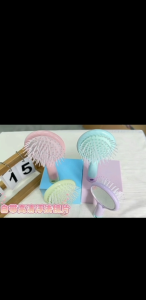
Simplicity Fashion Solid Color Massage Air Cushion Comb with Mirror - Reduce Hair Pulling & Wet Dry Use - Lovely Hair Care Tool Green 1Pcs
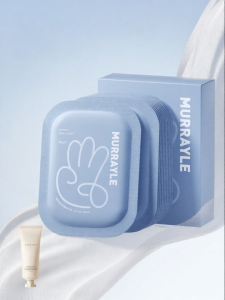
MURRAYLE | Moisturizing Hand Mask for Whitening Restoring Dry Rough Skin and Reducing Wrinkles

Adjustable Nose Shaper Memory Bridge Nose Lift Tape Nostril Reducer Nasal Contour Nose Shaping Beauty Tool

Relaxing Essential Oil Roller Blends 10ml for headache relieve stress fatigue & dizziness

Anti-Wrinkle Repair Face Cream Reckle Remover Serum Moisturizing Whitening Essence
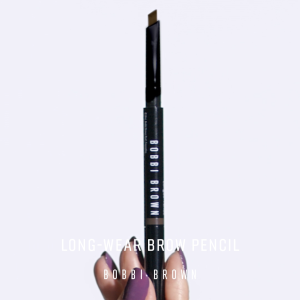
Bobbi Brown Long-Wear Brow Pencil | Waterproof Slanted Chiseled Tip Refillable

Lucenbase | Waterproof Long-lasting Conceal Makeup Foundation For Dry Combination & Oily Skin

6KW Sauna Heater Electric Sauna Steam Generator Stove Hotel Wet Dry Sauna Heater With Digital Display And Conrtoller

Premium Women’s Perfume – Classic Floral Powdery & Woody Eau de Parfum