


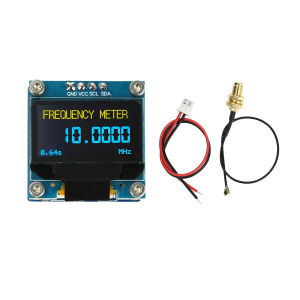
GAQQEE | PLJ-096OLED-H1 Frequency Display Module DC 8-10V 20MHz-2.7GHz RF Digital Signal Frequency Meter Featuring 0.96-inch OLED Display
Product Features:1. Compact and aesthetically pleasing design with dual-button operation and straightforward circuitry2. Unique gate control algorithm and non-interrupt design enhance measurement accuracy3. Dual independent IF preset design with additive and subtractive modes operating without interference4. Automatic settings retention function enables immediate use upon power-up without reconfiguration5. Widely applicable for measuring requirements in radios, walkie-talkies, oscillation circuits, etc.Product Description:The PLJ-096OLED-H1 is a cost-effective OLED frequency display module for continuous signal frequency measurement. Primarily used for displaying frequency values in transceivers and similar equipment, it is also suitable for general frequency measurement. Employing a unique gate control method and precise gate timing algorithm (non-timer interrupt), it achieves high measurement accuracy.Product Specifications:Product Name: Frequency Display ModuleOperating Voltage: DC 8-10V (9V recommended)Operating Current: Display: 0.96-inch OLED screenGate Time: 0.64 / 1.0 secondsMeasurement Accuracy: 100/64HzMeasurement Range: 20MHz-2.7GHzInput Impedance: High impedanceTiming Stability: ±2.5ppmMeasurement Data Output: UART serial outputOn-board Interfaces: Signal input, power interfaceApplication Scenarios: Radio frequency display, walkie-talkie frequency measurement, oscillation circuit frequency measurement, embedded applications, general frequency measurementPrecautions:1. Avoid exposing the instrument to high temperatures, humidity, or dusty environments, and prevent severe vibration2. The clock reference was calibrated using GPSDO prior to shipment, with sensitivity optimised. Avoid adjustment unless necessary3. The on-board signal input socket is a fragile component; handle plug insertion/removal with careUsage Q&A:1. Does this module interfere with transceivers?Answer: It is impossible to claim zero interference. Microcontrollers, crystal oscillators, and other components emit some radiation externally, though the intensity is typically low. Design measures have been implemented to mitigate this. Additionally, interference depends on the distance between the module and the transceiver's sensitive components, as well as the transceiver's characteristics. Should interference occur, try relocating the module or adding shielding.2. Why is the frequency display unstable?Answer: Firstly, ensure the input signal quality (strength, stability, etc.) meets the module's minimum requirements (see technical specifications). Secondly, verify the power supply quality – ripple should not be excessive. Alternatively, adjust the sensitivity trimming resistor to mitigate the issue.3. Why does the display fluctuate irregularly when no measurement signal is connected?Answer: First, check whether the power supply ripple for this module is excessive. Then, inspect the vicinity for other strong signal emissions.Delivery List:Module x1Signal connection cable x1Power connection cable x1

Prime Supply_Play Life
Review

You May Also Like

Adapter PCIe Card For NVMe M.2 for NGFF PCIe for Late 2013 2014 2015 2017 MacBook Air A1465 A1466 A1502 A1398 PCI-E X4 NVMe SSD
STARTRC | Ultraviolet Protection Filter ND8/16/32/64 Reduction Polarizing Lens For DJI Avata 2 Drone Accessories
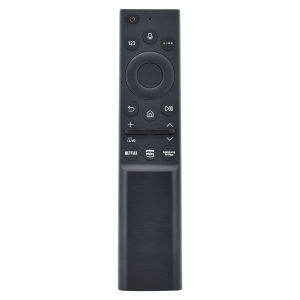
Brand New Samsung BN59-01363A New Generation Remote Control for Neo QLED 8K TV

ISIDO | Full-Enclosure Protective iPhone Case
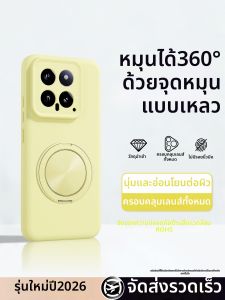
imobile | Liquid Shockproof Full Coverage Stand Case for Xiaomi 14 Series
BILIBILI | Dark Skull Gothic Print Luxury Fashion Full Lens Protective Case for Samsung Galaxy S26 S25 S24 A56 A36 Plus Ultra
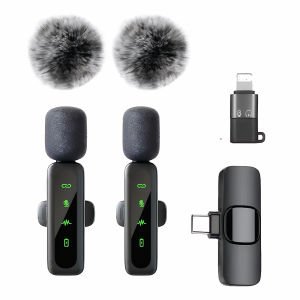
2-in-1 Plug-Play Lapel Clip-On Mic with Noise Reduction for Video Recording Vlog
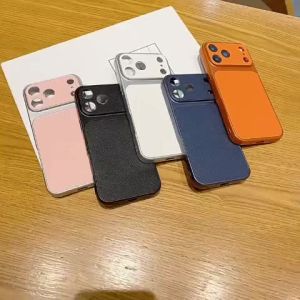
For Honor Magic 8 New faux leather phone case high-quality anti drop cover

9H Clear For Universal 7.0 8.0 9.0 10.0 Inch Tablet PC Tempered Glass
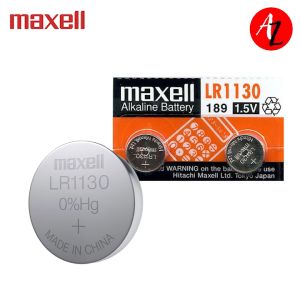
Maxell LR1130 Alkaline Button Cell Battery Long-Lasting Power for Watches Calculators Toys Clocks and Small Devices
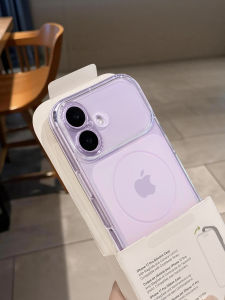
YOUSIDUN | Antifall Full Coverage Case Sand Transparent Windowed