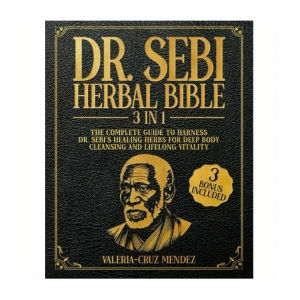

Dr. Sebi Herbal Bible Sacred Pills Complete Collection Book in English Herbal Medicine Guide Natural Remedies

1 Dr Sebi's Herbal Bible is a musthave literary novel for anyone interested in office culture and herbal remedies. 2 Dive into the world of traditional medicine with Dr Sebi's Herbal Bible, a captivating literary work that blends culture and literature seamlessly. 3 Explore the intersection of work and wellness with Dr Sebi's Herbal Bible, a literary masterpiece that delves into the power of herbal remedies. 4 Immerse yourself in the rich tapestry of herbal knowledge with Dr Sebi's Herbal Bible, a literary gem that transcends cultural boundaries. 5 Dr Sebi's Herbal Bible is a literary treasure trove for those who appreciate the art of storytelling and the healing power of herbs. Step into our Lazada store and immerse yourself in a treasure trove of amazing products. From the latest beauty trends to must-have home decor, we've got you covered. Our dedicated team is here to assist you every step of the way, ensuring your shopping experience is nothing short of extraordinary. Trust us to

vivisport
Review

You May Also Like

Black Leather Bible Cover with Handle & Zipper Pocket Large Capacity Christian Book Bag Organizer Church Travel Gift

Aluminum Alloy Spring Shock Absorbers Feet for Speaker Vibration Dampening AntiSlip Base Universal Compatibility

(New) Samsung Utos para ang pera ay di mauubos By Chinkee Tan Self Help Books

1 Piece Fret Leveling Tool Guitar Bass Neck Fingerboard Measuring Ruler Stainless Steel Fret Rocker Guitar Luthier Tool

PAGBASA READING MATHEMATICS NUMBER TRACING BOOKLET (100pages) BOOKLET A5 SIZE

Magsulat sa Filipino: A Comprehensive Guide\\n\\n Introduction to Writing in Filipino\\n\\nLearning how to write in Filipino, also known as Tagalog, is essential for anyone interested in understanding and appreciating the rich culture and history of the Philippines. This comprehensive guide aims to provide a step-by-step approach to writing in Filipino, along with practical tips and resources to help you improve your skills.\\n\\n Understanding the Basics of Filipino Language\\n\\nThe Filipino language is a member of the Malayo-Polynesian language family, spoken by over 80 million people worldwide. It has been influenced by various languages, including Spanish, English, and other indigenous languages. As a result, Filipino has a unique blend of vocabulary, grammar, and syntax that makes it distinct from other languages.\\n\\n Importance of Learning to Write in Filipino\\n\\nWriting in Filipino allows you to communicate effectively with native speakers, understand Filipino literature and media, and appreciate the rich cultural heritage of the Philippines. By learning to write in Filipino, you can expand your horizons and connect with people from different backgrounds.\\n\\n Original Product Information & Specifications\\n\\nIn this section, we will provide an overview of the features of the Filipino language, as well as the key differences between Filipino and other languages.\\n\\n Features of the Filipino Language\\n\\nThe Filipino language has several unique features that set it apart from other languages:\\n\\n* **Vocabulary**: Filipino has a rich vocabulary that includes words borrowed from Spanish, English, and other languages. \\n* **Grammar**: Filipino grammar is relatively simple compared to other languages, with a subject-verb-object sentence structure. \\n* **Syntax**: Filipino syntax allows for flexibility in sentence construction, making it easy to express complex ideas.\\n\\n Key Differences Between Filipino and Other Languages\\n\\nFilipino has several key differences compared to other languages:\\n\\n* **Vocabulary**: Filipino has a unique blend of vocabulary borrowed from various languages, including Spanish, English, and indigenous languages. \\n* **Grammar**: Filipino grammar is relatively simple compared to other languages, with a subject-verb-object sentence structure. \\n* **Syntax**: Filipino syntax allows for flexibility in sentence construction, making it easy to express complex ideas.\\n\\n Description of Writing in Filipino\\n\\nIn this section, we will provide a step-by-step guide to writing in Filipino, along with common mistakes to avoid when writing in Filipino.\\n\\n Step-by-Step Guide to Writing in Filipino\\n\\nTo write effectively in Filipino, follow these steps:\\n\\n1. Learn the basics of Filipino grammar, vocabulary, and syntax.\\n2. Practice writing in Filipino regularly.\\n3. Read Filipino literature and media to improve your understanding of the language.\\n4. Seek feedback from native speakers or language experts.\\n\\n Common Mistakes to Avoid When Writing in Filipino\\n\\nWhen writing in Filipino, avoid these common mistakes:\\n\\n* **Incorrect spelling**: Double-check your spelling to ensure accuracy.\\n* **Poor grammar**: Review your grammar rules to avoid errors.\\n* **Lack of clarity**: Make sure your writing is clear and concise.\\n* **Cultural insensitivity**: Be mindful of cultural nuances and avoid offensive language.\\n\\n Practical Tips for Improving Your Filipino Writing Skills\\n\\nIn this section, we will provide practical tips and resources to help you improve your Filipino writing skills.\\n\\n Practice Makes Perfect: Exercises to Improve Your Writing\\n\\nTo improve your Filipino writing skills, practice regularly by:\\n\\n* Writing short stories, essays, or articles in Filipino.\\n* Keeping a journal in Filipino.\\n* Engaging in language exchange programs with native speakers.\\n\\n Resources for Learning More About Writing in Filipino\\n\\nTo learn more about writing in Filipino, explore these resources:\\n\\n* Filipino language learning apps, such as Duolingo or Memrise.\\n* Online Filipino language courses, such as those offered by the University of the Philippines.\\n* Filipino literature and media, such as books, movies, and TV shows.\\n\\n Conclusion\\n\\nIn conclusion, writing in Filipino is an essential skill that allows you to communicate effectively with native speakers, understand Filipino literature and media, and appreciate the rich cultural heritage of the Philippines. By following the steps outlined in this guide and practicing regularly, you can improve your Filipino writing skills and expand your horizons.\\n\\n Recap of Key Points\\n\\n* Learn the basics of Filipino grammar, vocabulary, and syntax.\\n* Practice writing in Filipino regularly.\\n* Read Filipino literature and media to improve your understanding of the language.\\n* Seek feedback from native speakers or language experts.\\n\\n Encouragement to Continue Learning and Practicing\\n\\nLearning to write in Filipino takes time and effort, but the rewards are well worth it. Keep practicing and exploring the language, and you will soon find yourself communicating effectively in Filipino.\n}

1PC Car Crash Cymbal Air Vent Mini Drum Car Drum Cymbal Air Vent Car Hand-shooting Cymbals Musical Instrument For Car Interior

MK Snare Drum Shells PURE MAPLE WOOD Made In Taiwan

Difficult Riddles for Smart Kids (paperback) w/ Free Ebook and Bookmark

คาโป้เหล็ก(capo)สำหรับกีตาร์โปร่ง กีตาร์ไฟฟ้า เบส หนีบแน่น ไม่บอด ถอดหมุดได้ รุ่นCP-00 แถมฟรี ปิ๊กกีตาร์2ชิ้น+ที่เก็บปิ๊ก1ชิ้น

Adjustable 3/8 to 17mm Extension Poles For Phone Tablet Mounts For Microphones Boom Arms And Studio Accessories