

Logical Key Game Ages 3+ Matching Unlock Educational Toy Gift For Kids by WISHLAND

Logical Key Game Ages 3+ Matching Unlock Educational Toy Gift For Kids by WISHLAND

Logical Key Game is a highly engaging and educational toy designed specifically for children aged 3 years and above. This game is perfect for both solo play and group activities, making it a versatile addition to any child's playtime routine. WISHLAND, a reputable manufacturer of educational toys, has crafted this game using durable paper material and card, ensuring it is lightweight yet sturdy enough to withstand frequent use.

What is the Logical Key Game?

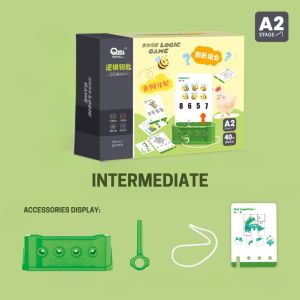
The Logical Key Game is a matching unlock game that offers endless hours of entertainment and education for young children. It includes 40 cards, a stand, a key, and a rope, providing ample opportunities for kids to develop their cognitive and social skills.

Key Features of the Logical Key Game

  • Durable paper material and card: Made from high-quality materials, this game is built to last.
  • Lightweight and portable: Easy to carry around, making it perfect for travel or playtime at home.
  • Solo or group play: Suitable for individual or team activities, fostering both independent thinking and teamwork.
  • Educational benefits: Enhances cognitive development and social skills through interactive gameplay.

How to Play the Logical Key Game

Playing the Logical Key Game is simple and fun. Players must match the cards by finding the corresponding keys and unlocking them using the provided key and rope. This process helps children develop problem-solving skills, critical thinking, and memory retention.

Benefits of the Logical Key Game

The Logical Key Game offers numerous benefits for children aged 3 years and above. Here are some of the ways this educational toy can help your child grow and learn.

Cognitive Development through the Logical Key Game

The Logical Key Game encourages cognitive development in several ways. By matching and unlocking cards, children improve their memory, concentration, and problem-solving abilities. These skills are essential for academic success and overall intellectual growth.

Social Skills Development through the Logical Key Game

When played in groups, the Logical Key Game helps children develop important social skills such as communication, cooperation, and teamwork. These skills are crucial for building strong relationships and succeeding in life.

How to Choose the Right Educational Toy for Your Child

Selecting the right educational toy for your child is essential for their development and learning. Here are some tips to help you make an informed decision.

Age Appropriate Toys: Logical Key Game Ages 3+

Choosing age-appropriate toys is vital for your child's growth and development. The Logical Key Game is designed specifically for children aged 3 years and above, making it an ideal choice for parents looking for educational toys that cater to their child's developmental stage.

Matching Unlock Game: A Gift for Children

The Logical Key Game makes an excellent gift for children. Its engaging gameplay and educational benefits make it a valuable addition to any child's toy collection. Plus, its lightweight and portable design make it easy to take along on trips or playdates.

WISHLAND Educational Toy: Quality & Durability

WISHLAND is committed to providing high-quality educational toys that stand the test of time. Here's what makes the Logical Key Game so durable and long-lasting.

Durable Paper Material & Card

The Logical Key Game is made from durable paper material and card, ensuring it can withstand frequent use and rough handling. This means your child can enjoy countless hours of fun and learning without worrying about the game breaking down.

Lightweight & Durable Design

The Logical Key Game's lightweight and portable design makes it easy to take along wherever you go. Its compact size and sturdy construction make it perfect for travel or playtime at home.

How to Get Started with the Logical Key Game

Getting started with the Logical Key Game is simple and straightforward. Follow these steps to set up the game and start playing.

Setting Up the Logical Key Game

To set up the Logical Key Game, simply lay out the cards on a flat surface and place the stand nearby. Attach the key and rope to the stand, and you're ready to begin.

Tips for Solo Play & Group Play

For solo play, encourage your child to focus on matching and unlocking cards independently. For group play, assign roles and responsibilities to foster teamwork and cooperation. Remember, the goal is to have fun while learning!

In conclusion, the Logical Key Game is an excellent educational toy for children aged 3 years and above. Its engaging gameplay, cognitive and social benefits, and durable construction make it a valuable addition to any child's toy collection. So why wait? Get your hands on the Logical Key Game today and watch your child's development soar!

Wishland
Wishland

Seller ratings 99%

Review

Oops
This video has no reviews.

You May Also Like

KAWES 38 Wood Acoustic Guitar for Adults 6 Steel-String Acoustic Guitar With Guitar Bag and Beginner Kits for Beginner
00:33

KAWES 38 Wood Acoustic Guitar for Adults 6 Steel-String Acoustic Guitar With Guitar Bag and Beginner Kits for Beginner

PCBS My Phonics Book 1-12 2nd Edition SET 2 (KT Phonics Workshop)
00:21

PCBS My Phonics Book 1-12 2nd Edition SET 2 (KT Phonics Workshop)

The 48 Laws Of Power For All Year Office Workers Social Elites Adults Managers Professionals: In-Depth Research Wisdom Success Experience
00:05

The 48 Laws Of Power For All Year Office Workers Social Elites Adults Managers Professionals: In-Depth Research Wisdom Success Experience

Original Low Action Guitar for Kids Adults Beginners Heart String Guitar 38 Inches Acoustic Guitar
00:51

Original Low Action Guitar for Kids Adults Beginners Heart String Guitar 38 Inches Acoustic Guitar

Microphone Stand Soundcard Tray Practical Multiuse for Mic Holder Live Tripod Bracket Recording Concert Stage Accessory
00:20

Microphone Stand Soundcard Tray Practical Multiuse for Mic Holder Live Tripod Bracket Recording Concert Stage Accessory

PCBS  Holy Bible DaySpring (Signature Collection) Large Print (Evergreen Leatherlike)
00:22

PCBS Holy Bible DaySpring (Signature Collection) Large Print (Evergreen Leatherlike)

Flanger FC-21: Guitar & Bass to Android & iPhone Converter
00:28

Flanger FC-21: Guitar & Bass to Android & iPhone Converter

Become Hangeul Master: Learn to Read and Write Korean Characters
00:42

Become Hangeul Master: Learn to Read and Write Korean Characters

Reading Savings Book Daily Reading Check in Learning Tool for Kindergarten to 2nd Grade Children Parent Child Reward System
00:16

Reading Savings Book Daily Reading Check in Learning Tool for Kindergarten to 2nd Grade Children Parent Child Reward System

Magsulat sa Filipino: A Comprehensive Guide\\n\\n Introduction to Writing in Filipino\\n\\nLearning how to write in Filipino, also known as Tagalog, is essential for anyone interested in understanding and appreciating the rich culture and history of the Philippines. This comprehensive guide aims to provide a step-by-step approach to writing in Filipino, along with practical tips and resources to help you improve your skills.\\n\\n Understanding the Basics of Filipino Language\\n\\nThe Filipino language is a member of the Malayo-Polynesian language family, spoken by over 80 million people worldwide. It has been influenced by various languages, including Spanish, English, and other indigenous languages. As a result, Filipino has a unique blend of vocabulary, grammar, and syntax that makes it distinct from other languages.\\n\\n Importance of Learning to Write in Filipino\\n\\nWriting in Filipino allows you to communicate effectively with native speakers, understand Filipino literature and media, and appreciate the rich cultural heritage of the Philippines. By learning to write in Filipino, you can expand your horizons and connect with people from different backgrounds.\\n\\n Original Product Information & Specifications\\n\\nIn this section, we will provide an overview of the features of the Filipino language, as well as the key differences between Filipino and other languages.\\n\\n Features of the Filipino Language\\n\\nThe Filipino language has several unique features that set it apart from other languages:\\n\\n* **Vocabulary**: Filipino has a rich vocabulary that includes words borrowed from Spanish, English, and other languages. \\n* **Grammar**: Filipino grammar is relatively simple compared to other languages, with a subject-verb-object sentence structure. \\n* **Syntax**: Filipino syntax allows for flexibility in sentence construction, making it easy to express complex ideas.\\n\\n Key Differences Between Filipino and Other Languages\\n\\nFilipino has several key differences compared to other languages:\\n\\n* **Vocabulary**: Filipino has a unique blend of vocabulary borrowed from various languages, including Spanish, English, and indigenous languages. \\n* **Grammar**: Filipino grammar is relatively simple compared to other languages, with a subject-verb-object sentence structure. \\n* **Syntax**: Filipino syntax allows for flexibility in sentence construction, making it easy to express complex ideas.\\n\\n Description of Writing in Filipino\\n\\nIn this section, we will provide a step-by-step guide to writing in Filipino, along with common mistakes to avoid when writing in Filipino.\\n\\n Step-by-Step Guide to Writing in Filipino\\n\\nTo write effectively in Filipino, follow these steps:\\n\\n1. Learn the basics of Filipino grammar, vocabulary, and syntax.\\n2. Practice writing in Filipino regularly.\\n3. Read Filipino literature and media to improve your understanding of the language.\\n4. Seek feedback from native speakers or language experts.\\n\\n Common Mistakes to Avoid When Writing in Filipino\\n\\nWhen writing in Filipino, avoid these common mistakes:\\n\\n* **Incorrect spelling**: Double-check your spelling to ensure accuracy.\\n* **Poor grammar**: Review your grammar rules to avoid errors.\\n* **Lack of clarity**: Make sure your writing is clear and concise.\\n* **Cultural insensitivity**: Be mindful of cultural nuances and avoid offensive language.\\n\\n Practical Tips for Improving Your Filipino Writing Skills\\n\\nIn this section, we will provide practical tips and resources to help you improve your Filipino writing skills.\\n\\n Practice Makes Perfect: Exercises to Improve Your Writing\\n\\nTo improve your Filipino writing skills, practice regularly by:\\n\\n* Writing short stories, essays, or articles in Filipino.\\n* Keeping a journal in Filipino.\\n* Engaging in language exchange programs with native speakers.\\n\\n Resources for Learning More About Writing in Filipino\\n\\nTo learn more about writing in Filipino, explore these resources:\\n\\n* Filipino language learning apps, such as Duolingo or Memrise.\\n* Online Filipino language courses, such as those offered by the University of the Philippines.\\n* Filipino literature and media, such as books, movies, and TV shows.\\n\\n Conclusion\\n\\nIn conclusion, writing in Filipino is an essential skill that allows you to communicate effectively with native speakers, understand Filipino literature and media, and appreciate the rich cultural heritage of the Philippines. By following the steps outlined in this guide and practicing regularly, you can improve your Filipino writing skills and expand your horizons.\\n\\n Recap of Key Points\\n\\n* Learn the basics of Filipino grammar, vocabulary, and syntax.\\n* Practice writing in Filipino regularly.\\n* Read Filipino literature and media to improve your understanding of the language.\\n* Seek feedback from native speakers or language experts.\\n\\n Encouragement to Continue Learning and Practicing\\n\\nLearning to write in Filipino takes time and effort, but the rewards are well worth it. Keep practicing and exploring the language, and you will soon find yourself communicating effectively in Filipino.\n}
00:12

Magsulat sa Filipino: A Comprehensive Guide\\n\\n Introduction to Writing in Filipino\\n\\nLearning how to write in Filipino, also known as Tagalog, is essential for anyone interested in understanding and appreciating the rich culture and history of the Philippines. This comprehensive guide aims to provide a step-by-step approach to writing in Filipino, along with practical tips and resources to help you improve your skills.\\n\\n Understanding the Basics of Filipino Language\\n\\nThe Filipino language is a member of the Malayo-Polynesian language family, spoken by over 80 million people worldwide. It has been influenced by various languages, including Spanish, English, and other indigenous languages. As a result, Filipino has a unique blend of vocabulary, grammar, and syntax that makes it distinct from other languages.\\n\\n Importance of Learning to Write in Filipino\\n\\nWriting in Filipino allows you to communicate effectively with native speakers, understand Filipino literature and media, and appreciate the rich cultural heritage of the Philippines. By learning to write in Filipino, you can expand your horizons and connect with people from different backgrounds.\\n\\n Original Product Information & Specifications\\n\\nIn this section, we will provide an overview of the features of the Filipino language, as well as the key differences between Filipino and other languages.\\n\\n Features of the Filipino Language\\n\\nThe Filipino language has several unique features that set it apart from other languages:\\n\\n* **Vocabulary**: Filipino has a rich vocabulary that includes words borrowed from Spanish, English, and other languages. \\n* **Grammar**: Filipino grammar is relatively simple compared to other languages, with a subject-verb-object sentence structure. \\n* **Syntax**: Filipino syntax allows for flexibility in sentence construction, making it easy to express complex ideas.\\n\\n Key Differences Between Filipino and Other Languages\\n\\nFilipino has several key differences compared to other languages:\\n\\n* **Vocabulary**: Filipino has a unique blend of vocabulary borrowed from various languages, including Spanish, English, and indigenous languages. \\n* **Grammar**: Filipino grammar is relatively simple compared to other languages, with a subject-verb-object sentence structure. \\n* **Syntax**: Filipino syntax allows for flexibility in sentence construction, making it easy to express complex ideas.\\n\\n Description of Writing in Filipino\\n\\nIn this section, we will provide a step-by-step guide to writing in Filipino, along with common mistakes to avoid when writing in Filipino.\\n\\n Step-by-Step Guide to Writing in Filipino\\n\\nTo write effectively in Filipino, follow these steps:\\n\\n1. Learn the basics of Filipino grammar, vocabulary, and syntax.\\n2. Practice writing in Filipino regularly.\\n3. Read Filipino literature and media to improve your understanding of the language.\\n4. Seek feedback from native speakers or language experts.\\n\\n Common Mistakes to Avoid When Writing in Filipino\\n\\nWhen writing in Filipino, avoid these common mistakes:\\n\\n* **Incorrect spelling**: Double-check your spelling to ensure accuracy.\\n* **Poor grammar**: Review your grammar rules to avoid errors.\\n* **Lack of clarity**: Make sure your writing is clear and concise.\\n* **Cultural insensitivity**: Be mindful of cultural nuances and avoid offensive language.\\n\\n Practical Tips for Improving Your Filipino Writing Skills\\n\\nIn this section, we will provide practical tips and resources to help you improve your Filipino writing skills.\\n\\n Practice Makes Perfect: Exercises to Improve Your Writing\\n\\nTo improve your Filipino writing skills, practice regularly by:\\n\\n* Writing short stories, essays, or articles in Filipino.\\n* Keeping a journal in Filipino.\\n* Engaging in language exchange programs with native speakers.\\n\\n Resources for Learning More About Writing in Filipino\\n\\nTo learn more about writing in Filipino, explore these resources:\\n\\n* Filipino language learning apps, such as Duolingo or Memrise.\\n* Online Filipino language courses, such as those offered by the University of the Philippines.\\n* Filipino literature and media, such as books, movies, and TV shows.\\n\\n Conclusion\\n\\nIn conclusion, writing in Filipino is an essential skill that allows you to communicate effectively with native speakers, understand Filipino literature and media, and appreciate the rich cultural heritage of the Philippines. By following the steps outlined in this guide and practicing regularly, you can improve your Filipino writing skills and expand your horizons.\\n\\n Recap of Key Points\\n\\n* Learn the basics of Filipino grammar, vocabulary, and syntax.\\n* Practice writing in Filipino regularly.\\n* Read Filipino literature and media to improve your understanding of the language.\\n* Seek feedback from native speakers or language experts.\\n\\n Encouragement to Continue Learning and Practicing\\n\\nLearning to write in Filipino takes time and effort, but the rewards are well worth it. Keep practicing and exploring the language, and you will soon find yourself communicating effectively in Filipino.\n}

Lyre Carrying Case Storage Bag Harp Lyre Instrument Storage Bag Lyre Harp Bag Convenient Lyre Bag Lyre Harp Carrying Bag
00:20

Lyre Carrying Case Storage Bag Harp Lyre Instrument Storage Bag Lyre Harp Bag Convenient Lyre Bag Lyre Harp Carrying Bag

Enya NOVA Go SP1 Carbon Fiber Acoustic Electric Guitar with Smart AcousticPlus 35 Inch Travel guitar Electric accoustic guitar sale Bundle Kit of Gig Bag Strap Charging Cable Instrument Cableelectric guitar full setenya guitar official store
01:22

Enya NOVA Go SP1 Carbon Fiber Acoustic Electric Guitar with Smart AcousticPlus 35 Inch Travel guitar Electric accoustic guitar sale Bundle Kit of Gig Bag Strap Charging Cable Instrument Cableelectric guitar full setenya guitar official store