

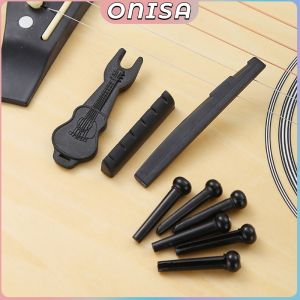
Onisa Guitar Saddle and Slotted Nut for 6 Strings Acoustic Guitar Parts Accessory Set

Onisa Guitar Saddle and Slotted Nut for 6 Strings Acoustic Guitar Parts Accessory Set

Introduction to Onisa Guitar Saddle & Slotted Nut

What are Onisa Guitar Saddle & Slotted Nut?

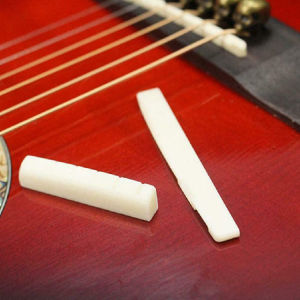
The Onisa Guitar Saddle and Slotted Nut are essential components of any acoustic guitar, specifically designed for 6-string instruments. These parts are crucial for maintaining the sound quality and overall playability of your guitar. The saddle and nut work together to adjust the string height and spacing, ensuring that your instrument remains in tune and produces a rich, resonant tone.

Why Choose Onisa Guitar Saddle & Slotted Nut?

Onisa Guitar Saddle and Slotted Nut are made from high-quality plastic, ensuring durability and longevity. Their lightweight design makes them easy to carry, while their sleek appearance complements any acoustic guitar. Moreover, these parts are designed to fit standard guitar sizes, making them a versatile addition to any musician's toolkit.

Features of Onisa Guitar Saddle & Slotted Nut

High-Quality Plastic Construction

Onisa Guitar Saddle and Slotted Nut are crafted from premium plastic materials, providing exceptional durability and resistance to wear and tear. This high-quality construction ensures that these parts will withstand the rigors of regular use, maintaining their shape and function over time.

Lightweight & Easy to Carry

These guitar repair parts are lightweight and compact, making them easy to transport and store. Whether you're a professional musician or a casual player, the Onisa Guitar Saddle and Slotted Nut are an ideal accessory set for any acoustic guitar enthusiast.

Easy to Use & Fits Standard Guitar Sizes

Designed to fit standard guitar sizes, the Onisa Guitar Saddle and Slotted Nut are easy to install and adjust. Their universal design makes them compatible with a wide range of acoustic guitars, ensuring that they will work seamlessly with your instrument.

How to Use Onisa Guitar Saddle & Slotted Nut

Pulling Strings Without Damaging Guitar

The Onisa Guitar Saddle and Slotted Nut are designed to pull strings directly without damaging your guitar. This feature makes them an essential accessory set for any acoustic guitar repair parts collection, allowing you to maintain your instrument's sound quality and playability.

Installing Onisa Guitar Saddle & Slotted Nut

Installing the Onisa Guitar Saddle and Slotted Nut is a straightforward process. First, remove the old saddle and nut from your guitar. Then, carefully align the new parts with the bridge and headstock, ensuring that they are securely in place. Finally, adjust the string height and spacing to achieve optimal sound quality and playability.

Maintaining & Caring for Onisa Guitar Saddle & Slotted Nut

To ensure the longevity of your Onisa Guitar Saddle and Slotted Nut, it's important to regularly clean and inspect them. Remove any dirt or debris that may accumulate on the parts, and check for signs of wear or damage. By taking proper care of these guitar repair parts, you can extend their lifespan and maintain the sound quality of your acoustic guitar.

Conclusion & Final Thoughts

Summary of Onisa Guitar Saddle & Slotted Nut

In summary, the Onisa Guitar Saddle and Slotted Nut are essential components for maintaining the sound quality and playability of your acoustic guitar. Their high-quality plastic construction, lightweight design, and easy-to-use features make them a valuable addition to any musician's toolkit.

Where to Purchase Onisa Guitar Saddle & Slotted Nut

You can purchase the Onisa Guitar Saddle and Slotted Nut at various online retailers, including Amazon, eBay, and other music equipment stores. With their universal design and compatibility with standard guitar sizes, these parts are an ideal accessory set for any acoustic guitar enthusiast.

Onisa
Onisa

Seller ratings 98%

You May Also Like

42mm Electric Guitar String Locking Nut Zinc Alloy For Floyd Rose Tremolo Bridge Parts With Mounting Screws Guitar Accessories
00:10

42mm Electric Guitar String Locking Nut Zinc Alloy For Floyd Rose Tremolo Bridge Parts With Mounting Screws Guitar Accessories

Guitar Head Clip Holder & Livebroadcast Bracket Clip: A Comprehensive Guide
00:40

Guitar Head Clip Holder & Livebroadcast Bracket Clip: A Comprehensive Guide

RUBIO TOKAI GOLDSTAR SOUND CAMEL COLOR
00:32

RUBIO TOKAI GOLDSTAR SOUND CAMEL COLOR

educratePH Little Musician Performer Instrument Set Drums / Trumpet / Harmonica
00:25

educratePH Little Musician Performer Instrument Set Drums / Trumpet / Harmonica

KIDS TRACING AND WRITING PRACTICE BOOK ALPHABET AND NUMBERS WORKBOOK EDUCATIONAL CHILDRENS BOOKS 38 PAGES
00:21

KIDS TRACING AND WRITING PRACTICE BOOK ALPHABET AND NUMBERS WORKBOOK EDUCATIONAL CHILDRENS BOOKS 38 PAGES

Magsulat sa Filipino: A Comprehensive Guide\\n\\n Introduction to Writing in Filipino\\n\\nLearning how to write in Filipino, also known as Tagalog, is essential for anyone interested in understanding and appreciating the rich culture and history of the Philippines. This comprehensive guide aims to provide a step-by-step approach to writing in Filipino, along with practical tips and resources to help you improve your skills.\\n\\n Understanding the Basics of Filipino Language\\n\\nThe Filipino language is a member of the Malayo-Polynesian language family, spoken by over 80 million people worldwide. It has been influenced by various languages, including Spanish, English, and other indigenous languages. As a result, Filipino has a unique blend of vocabulary, grammar, and syntax that makes it distinct from other languages.\\n\\n Importance of Learning to Write in Filipino\\n\\nWriting in Filipino allows you to communicate effectively with native speakers, understand Filipino literature and media, and appreciate the rich cultural heritage of the Philippines. By learning to write in Filipino, you can expand your horizons and connect with people from different backgrounds.\\n\\n Original Product Information & Specifications\\n\\nIn this section, we will provide an overview of the features of the Filipino language, as well as the key differences between Filipino and other languages.\\n\\n Features of the Filipino Language\\n\\nThe Filipino language has several unique features that set it apart from other languages:\\n\\n* **Vocabulary**: Filipino has a rich vocabulary that includes words borrowed from Spanish, English, and other languages. \\n* **Grammar**: Filipino grammar is relatively simple compared to other languages, with a subject-verb-object sentence structure. \\n* **Syntax**: Filipino syntax allows for flexibility in sentence construction, making it easy to express complex ideas.\\n\\n Key Differences Between Filipino and Other Languages\\n\\nFilipino has several key differences compared to other languages:\\n\\n* **Vocabulary**: Filipino has a unique blend of vocabulary borrowed from various languages, including Spanish, English, and indigenous languages. \\n* **Grammar**: Filipino grammar is relatively simple compared to other languages, with a subject-verb-object sentence structure. \\n* **Syntax**: Filipino syntax allows for flexibility in sentence construction, making it easy to express complex ideas.\\n\\n Description of Writing in Filipino\\n\\nIn this section, we will provide a step-by-step guide to writing in Filipino, along with common mistakes to avoid when writing in Filipino.\\n\\n Step-by-Step Guide to Writing in Filipino\\n\\nTo write effectively in Filipino, follow these steps:\\n\\n1. Learn the basics of Filipino grammar, vocabulary, and syntax.\\n2. Practice writing in Filipino regularly.\\n3. Read Filipino literature and media to improve your understanding of the language.\\n4. Seek feedback from native speakers or language experts.\\n\\n Common Mistakes to Avoid When Writing in Filipino\\n\\nWhen writing in Filipino, avoid these common mistakes:\\n\\n* **Incorrect spelling**: Double-check your spelling to ensure accuracy.\\n* **Poor grammar**: Review your grammar rules to avoid errors.\\n* **Lack of clarity**: Make sure your writing is clear and concise.\\n* **Cultural insensitivity**: Be mindful of cultural nuances and avoid offensive language.\\n\\n Practical Tips for Improving Your Filipino Writing Skills\\n\\nIn this section, we will provide practical tips and resources to help you improve your Filipino writing skills.\\n\\n Practice Makes Perfect: Exercises to Improve Your Writing\\n\\nTo improve your Filipino writing skills, practice regularly by:\\n\\n* Writing short stories, essays, or articles in Filipino.\\n* Keeping a journal in Filipino.\\n* Engaging in language exchange programs with native speakers.\\n\\n Resources for Learning More About Writing in Filipino\\n\\nTo learn more about writing in Filipino, explore these resources:\\n\\n* Filipino language learning apps, such as Duolingo or Memrise.\\n* Online Filipino language courses, such as those offered by the University of the Philippines.\\n* Filipino literature and media, such as books, movies, and TV shows.\\n\\n Conclusion\\n\\nIn conclusion, writing in Filipino is an essential skill that allows you to communicate effectively with native speakers, understand Filipino literature and media, and appreciate the rich cultural heritage of the Philippines. By following the steps outlined in this guide and practicing regularly, you can improve your Filipino writing skills and expand your horizons.\\n\\n Recap of Key Points\\n\\n* Learn the basics of Filipino grammar, vocabulary, and syntax.\\n* Practice writing in Filipino regularly.\\n* Read Filipino literature and media to improve your understanding of the language.\\n* Seek feedback from native speakers or language experts.\\n\\n Encouragement to Continue Learning and Practicing\\n\\nLearning to write in Filipino takes time and effort, but the rewards are well worth it. Keep practicing and exploring the language, and you will soon find yourself communicating effectively in Filipino.\n}
00:12

Magsulat sa Filipino: A Comprehensive Guide\\n\\n Introduction to Writing in Filipino\\n\\nLearning how to write in Filipino, also known as Tagalog, is essential for anyone interested in understanding and appreciating the rich culture and history of the Philippines. This comprehensive guide aims to provide a step-by-step approach to writing in Filipino, along with practical tips and resources to help you improve your skills.\\n\\n Understanding the Basics of Filipino Language\\n\\nThe Filipino language is a member of the Malayo-Polynesian language family, spoken by over 80 million people worldwide. It has been influenced by various languages, including Spanish, English, and other indigenous languages. As a result, Filipino has a unique blend of vocabulary, grammar, and syntax that makes it distinct from other languages.\\n\\n Importance of Learning to Write in Filipino\\n\\nWriting in Filipino allows you to communicate effectively with native speakers, understand Filipino literature and media, and appreciate the rich cultural heritage of the Philippines. By learning to write in Filipino, you can expand your horizons and connect with people from different backgrounds.\\n\\n Original Product Information & Specifications\\n\\nIn this section, we will provide an overview of the features of the Filipino language, as well as the key differences between Filipino and other languages.\\n\\n Features of the Filipino Language\\n\\nThe Filipino language has several unique features that set it apart from other languages:\\n\\n* **Vocabulary**: Filipino has a rich vocabulary that includes words borrowed from Spanish, English, and other languages. \\n* **Grammar**: Filipino grammar is relatively simple compared to other languages, with a subject-verb-object sentence structure. \\n* **Syntax**: Filipino syntax allows for flexibility in sentence construction, making it easy to express complex ideas.\\n\\n Key Differences Between Filipino and Other Languages\\n\\nFilipino has several key differences compared to other languages:\\n\\n* **Vocabulary**: Filipino has a unique blend of vocabulary borrowed from various languages, including Spanish, English, and indigenous languages. \\n* **Grammar**: Filipino grammar is relatively simple compared to other languages, with a subject-verb-object sentence structure. \\n* **Syntax**: Filipino syntax allows for flexibility in sentence construction, making it easy to express complex ideas.\\n\\n Description of Writing in Filipino\\n\\nIn this section, we will provide a step-by-step guide to writing in Filipino, along with common mistakes to avoid when writing in Filipino.\\n\\n Step-by-Step Guide to Writing in Filipino\\n\\nTo write effectively in Filipino, follow these steps:\\n\\n1. Learn the basics of Filipino grammar, vocabulary, and syntax.\\n2. Practice writing in Filipino regularly.\\n3. Read Filipino literature and media to improve your understanding of the language.\\n4. Seek feedback from native speakers or language experts.\\n\\n Common Mistakes to Avoid When Writing in Filipino\\n\\nWhen writing in Filipino, avoid these common mistakes:\\n\\n* **Incorrect spelling**: Double-check your spelling to ensure accuracy.\\n* **Poor grammar**: Review your grammar rules to avoid errors.\\n* **Lack of clarity**: Make sure your writing is clear and concise.\\n* **Cultural insensitivity**: Be mindful of cultural nuances and avoid offensive language.\\n\\n Practical Tips for Improving Your Filipino Writing Skills\\n\\nIn this section, we will provide practical tips and resources to help you improve your Filipino writing skills.\\n\\n Practice Makes Perfect: Exercises to Improve Your Writing\\n\\nTo improve your Filipino writing skills, practice regularly by:\\n\\n* Writing short stories, essays, or articles in Filipino.\\n* Keeping a journal in Filipino.\\n* Engaging in language exchange programs with native speakers.\\n\\n Resources for Learning More About Writing in Filipino\\n\\nTo learn more about writing in Filipino, explore these resources:\\n\\n* Filipino language learning apps, such as Duolingo or Memrise.\\n* Online Filipino language courses, such as those offered by the University of the Philippines.\\n* Filipino literature and media, such as books, movies, and TV shows.\\n\\n Conclusion\\n\\nIn conclusion, writing in Filipino is an essential skill that allows you to communicate effectively with native speakers, understand Filipino literature and media, and appreciate the rich cultural heritage of the Philippines. By following the steps outlined in this guide and practicing regularly, you can improve your Filipino writing skills and expand your horizons.\\n\\n Recap of Key Points\\n\\n* Learn the basics of Filipino grammar, vocabulary, and syntax.\\n* Practice writing in Filipino regularly.\\n* Read Filipino literature and media to improve your understanding of the language.\\n* Seek feedback from native speakers or language experts.\\n\\n Encouragement to Continue Learning and Practicing\\n\\nLearning to write in Filipino takes time and effort, but the rewards are well worth it. Keep practicing and exploring the language, and you will soon find yourself communicating effectively in Filipino.\n}

EL LIBRO SECRETO DE LAS LLAVES DEL MEDALLON: A Comprehensive Guide
00:20

EL LIBRO SECRETO DE LAS LLAVES DEL MEDALLON: A Comprehensive Guide

1 Pair Anti-Slip Drumstick Wrap Drum Stick Grips Absorb Sweat Sleeve for 7A 5A 5B 7B Drummers Drumsticks Durable
00:10

1 Pair Anti-Slip Drumstick Wrap Drum Stick Grips Absorb Sweat Sleeve for 7A 5A 5B 7B Drummers Drumsticks Durable

27 LOVE SONGS -FOR PIANO VOCAL GUITAR
00:29

27 LOVE SONGS -FOR PIANO VOCAL GUITAR

DJ disco lights 60 pattern party lights laser stroboscopic lights USB-powered projectors portable family party camping decorations
00:31

DJ disco lights 60 pattern party lights laser stroboscopic lights USB-powered projectors portable family party camping decorations

Sudden Superstar Claire Betita de Guzman: Original Description & Specifications
00:29

Sudden Superstar Claire Betita de Guzman: Original Description & Specifications

Marungko set of 5 booklet gabay sa pagbasa preschool to grade 1 basic reading for beginners kids learn to read simple wo
01:00

Marungko set of 5 booklet gabay sa pagbasa preschool to grade 1 basic reading for beginners kids learn to read simple wo