


Erlenmeyer Flask: A Comprehensive Guide to 100-1000ML Glass Flasks
Erlenmeyer Flask: A Comprehensive Guide to 100-1000ML Glass Flasks
Understanding the Erlenmeyer Flask
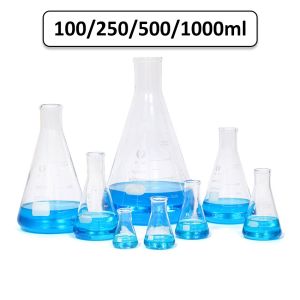
Erlenmeyer flasks, also known as conical flasks or triangle flasks, are essential laboratory equipment used in various scientific fields, including chemistry, biology, and physics. These versatile glass flasks are designed to withstand high temperatures, pressure, and corrosive chemicals, making them ideal for numerous laboratory applications. In this comprehensive guide, we will explore the different types of Erlenmeyer flasks, their key features and benefits, how to choose the right one for your laboratory needs, proper handling and maintenance procedures, and their applications in chemistry and science.
Types of Erlenmeyer Flasks
Erlenmeyer flasks come in various sizes, ranging from 100 mL to 1000 mL, allowing users to select the appropriate capacity based on their specific requirements. They are available in different materials, including borosilicate glass, which offers excellent thermal shock resistance and chemical durability. Additionally, some Erlenmeyer flasks may feature ground-glass joints, allowing them to be securely connected to other laboratory equipment.
Key Features & Benefits
Some of the key features and benefits of Erlenmeyer flasks include:
- Straight small mouth design: This feature enables easy pouring and prevents spills, making it ideal for titration experiments and chemical reactions.
- Triangle shape: The conical shape of the flask helps minimize splashing during vigorous mixing and swirling, reducing the risk of spills and contamination.
- Graduated markings: Most Erlenmeyer flasks are equipped with graduated markings, allowing users to accurately measure liquid volumes.
- Wide base: The wide base provides stability, preventing the flask from tipping over during use.
How to Choose the Right Erlenmeyer Flask
Selecting the appropriate Erlenmeyer flask for your laboratory needs involves considering several factors, including your specific laboratory requirements, capacity requirements, and material quality.
Identifying Your Laboratory Needs
Before selecting an Erlenmeyer flask, consider the type of experiments you will be conducting and the chemicals you will be working with. Different types of flasks may be better suited for specific applications, such as titration experiments or sample preparation.
Assessing Capacity Requirements
Choose an Erlenmeyer flask with a capacity that meets your laboratory needs. Flasks ranging from 100 mL to 1000 mL are available, allowing users to select the appropriate size based on their specific requirements.
Considering Material Quality
Select an Erlenmeyer flask made from high-quality glass, such as borosilicate glass, which offers excellent thermal shock resistance and chemical durability. Additionally, consider the presence of ground-glass joints, which allow for secure connections to other laboratory equipment.
Proper Handling & Maintenance of Erlenmeyer Flasks
To ensure the longevity and optimal performance of your Erlenmeyer flask, it is essential to follow proper handling and maintenance procedures, including cleaning, storage, and disposal methods.
Cleaning Procedures
Clean Erlenmeyer flasks thoroughly after each use using a suitable cleaning solution, such as a mild detergent or laboratory-grade cleaner. Rinse the flask thoroughly with distilled water to remove any remaining residues. Allow the flask to air dry before storing.
Storage Guidelines
Store Erlenmeyer flasks in a clean, dry location away from direct sunlight and heat sources. Ensure the flasks are securely stored to prevent damage or breakage.
Disposal Methods
Dispose of Erlenmeyer flasks according to local regulations and guidelines. In most cases, glass laboratory equipment can be recycled or disposed of through a certified waste management facility.
Applications of Erlenmeyer Flasks in Chemistry & Science
Erlenmeyer flasks play a crucial role in various scientific applications, including chemical reactions, titration experiments, and sample preparation.
Chemical Reactions
Erlenmeyer flasks are commonly used in chemical reactions due to their ability to withstand high temperatures, pressure, and corrosive chemicals. Their conical shape helps minimize splashing during vigorous mixing and swirling, reducing the risk of spills and contamination.
Titration Experiments
The straight small mouth design of Erlenmeyer flasks makes them ideal for titration experiments, allowing users to accurately measure liquid volumes and prevent spills during the process.
Sample Preparation
Erlenmeyer flasks are often used in sample preparation processes, such as filtration, distillation, and extraction. Their wide base provides stability, preventing the flask from tipping over during use.

LEOOYI Toys & Games
Review

You May Also Like
![[Shelleys] 100pcs Plastic Squeeze 4ml Transfer Dropper Disposable Pipettes For Cupcake](https://img.lazcdn.com/g/p/c493e6729415c61cc276e159e245cdcb.jpg_300x300q80.jpg)
[Shelleys] 100pcs Plastic Squeeze 4ml Transfer Dropper Disposable Pipettes For Cupcake

26L Trauma Bag Family Medicals Bag Emergency Package Outdoor First Aid Kit Emergency Kit Camping Equipment Large-First-Aid-Bag
Genuine Recombinant Human Interferon a2b Antibacterial Ointment & Topical Gel: Anxing Brand Overview

Beetroot Capsules Strengthen Immunity Promotes Detoxification Benefits Cardiovascular Function Beetroot Dietary Supplement
Toe Training Band Resistance Stretching Strap Toe Stretch Band Toe Stretching Strap Toe Strengthener Foot Leg Stretcher

Navitas Barley Grass Powder 100% Natural Healthy Organic Pure Barley Grass Low Sugar Body Diabetic Drink Moistening Slimming Detoxification and Weight Loss Barley Matcha Beverage Powder

ULTABIO Postbiotic: Trial Pack & Bundles

Wrist Bandage Belt Orthopedic Hand Brace Wrist Support Finger Splint Carpal Tunnel Syndrome

KEEPWORKING Small & Portable Pill Box: Keep Your Medication Safe & Secure with this Waterproof Keychain Pill Holder!

Sport Nasal Dilator Sleep Nasal Breathing Dilators Starter Kit Nose Breathe Strips Magnetic Nasal Strips Reduce Snoring
1000pcs Size 00 White/White Color -OSPA High Quality Empty Gelatin Capsule