

Key Takeaways
- Targeted exfoliation saves time and reduces salon visits: A motorized device removes thickened skin in 10–15 minutes per session, letting you prepare for open shoes without booking lengthy appointments.
- Consistent use prevents callus rebound in humid climates: Maintaining a gentle weekly routine stops dry patches from hardening when exposed to heat, sweat, and frequent barefoot wear.
- Compact, rechargeable models offer the best long-term value: Devices priced between ₱800 and ₱2,500 deliver salon-level smoothness while staying travel-ready and easy to store.
Why Open Shoes Reveal What Manual Files Miss
The switch to sandals, slides, or beachwear often comes with a moment of hesitation. After months of being hidden, your heels are suddenly on display, and you notice the dry, thickened skin that closed shoes conveniently concealed. In a warm, humid climate, this issue is even more pronounced. The combination of heat, sweat, and frequent barefoot walking accelerates the buildup of dead skin, leading to stubborn calluses that feel rough and look discolored.
For years, the go-to solutions have been manual foot files or pumice stones. However, these methods have significant drawbacks. They require considerable physical effort and pressure, which can be tiring and difficult to maintain evenly. This often results in an uneven texture, where some spots are overly scrubbed while others remain rough. More importantly, aggressive manual filing can create micro-tears in the skin, leaving it vulnerable to irritation and actually encouraging a faster rebound of hardened skin as the body tries to protect itself.
Professional pedicures offer a temporary escape, but they come with their own set of challenges. The recurring cost can quickly add up, and finding time for a 60-minute appointment isn’t always practical. An electric callus remover bridges this gap perfectly. It provides a predictable, at-home solution that fits into your existing self-care routine, offering the precision of a professional tool without the recurring expense or time commitment. It’s about regaining control and confidence, ensuring your feet are ready for open shoes whenever you are.
How the Mechanism Works for Fast, Visible Results
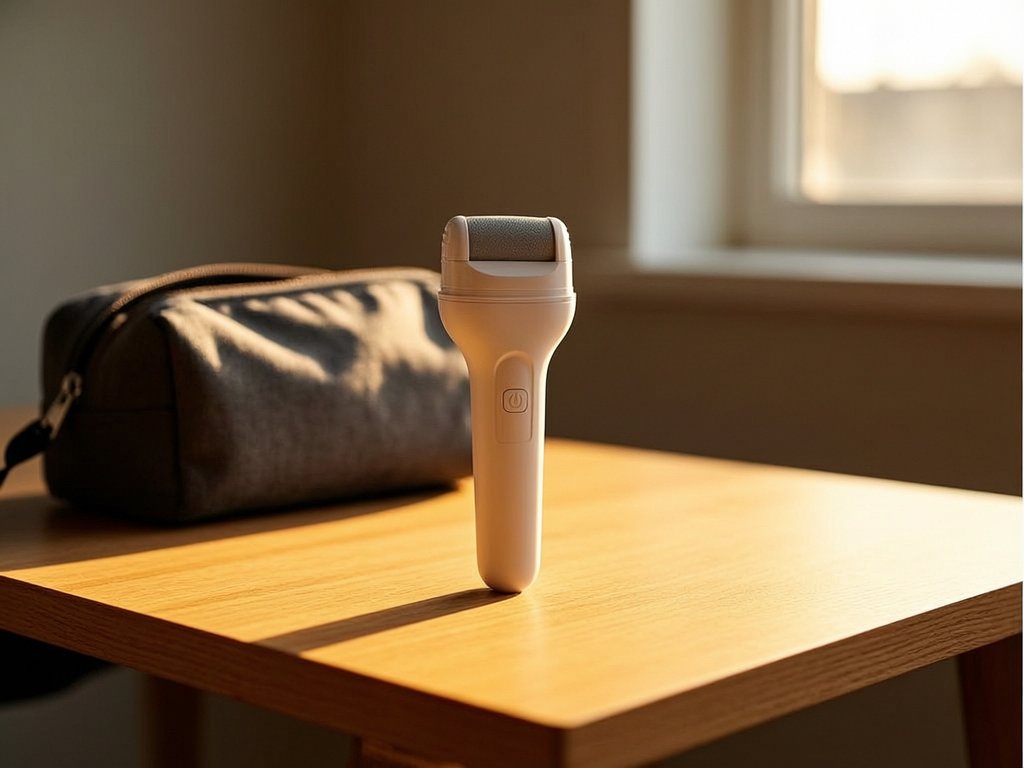
The magic behind an electric callus remover lies in its simple yet effective design: a rotating micro-abrasive head. Think of it as an automated polisher for your feet. Instead of sharp blades that cut or coarse graters that shred, the device uses a roller coated in fine, mineral-like particles. When powered on, this head spins rapidly, gently buffing away layers of dead, dry skin.
Most devices come with adjustable speed settings, allowing you to customize the intensity. A lower speed is perfect for sensitive areas or general smoothing, while a higher speed tackles thicker, more stubborn calluses on the heels. The key to its safety and effectiveness is that the mechanism is designed to exfoliate dead tissue without harming the healthy, living skin underneath. It lifts and sands away the roughness rather than cutting into it, which is why you see a smoother, more uniform texture after the very first use without the risk of nicks or cuts.
This directly addresses the common desire to “get smooth feet fast before a beach trip.” A realistic timeline involves an initial 10–15 minute session to address the bulk of the buildup. You’ll see an immediate improvement. Following this, one or two shorter maintenance sessions of about 5 minutes per foot each week will keep the skin consistently smooth. The speed of the results comes from controlled, consistent friction, not aggressive scraping. This process respects your skin’s integrity, reducing the risk of irritation and ensuring the results are not only fast but also lasting.
Quick Comparison
| Feature | Electric Callus Remover | Salon Pedicure | Manual Foot File |
|---|---|---|---|
| Session Time | 10–15 minutes | 45–60 minutes | 20–30 minutes (requires effort) |
| Cost per Use | ~₱50–₱80 (after device purchase) | ₱800–₱1,500 per visit | ₱150–₱300 upfront |
| Result Consistency | High (adjustable heads, even pressure) | Variable (depends on technician) | Low (manual pressure varies) |
| Best For | Regular maintenance & travel prep | Pampering experience | Light touch-ups only |
Step-by-Step Routine for Reliable Before-and-After Results
Achieving and maintaining salon-smooth heels at home is straightforward with a consistent routine. Following these steps ensures you get the best possible results safely and effectively, transforming rough skin into a soft, sandal-ready surface.
- Prepare Your Feet: Start with clean, dry feet. While some believe a long soak is necessary, it can actually make the skin too soft and difficult for the device to grip. Instead, a brief 5-minute soak in warm water is sufficient to soften the outer edges of the callus without waterlogging the skin. Pat your feet completely dry with a towel before you begin.
- Select the Right Attachment: Most electric callus removers come with interchangeable heads. Start with the coarse-grit attachment for the initial pass on thick, stubborn calluses. This head is designed to break down the densest layers of dead skin efficiently. For subsequent maintenance sessions or for more sensitive areas, switch to the fine-grit head, which acts as a polisher to refine the skin's texture.
- Glide, Don't Press: Turn the device on and gently glide it over the callused area. Use slow, deliberate motions, moving in one direction. Avoid pressing down hard. The rotating head is designed to do the work for you. Applying too much pressure can stop the roller or, worse, cause irritation. Let the device float over your heel, the ball of your foot, and along the sides of your big toe for about 3-4 seconds per area before moving on. You will see the dry skin turning into a fine powder.
- Moisturize Immediately: After you've finished exfoliating and rinsed the dust from your feet, the final step is crucial: hydration. Apply a thick, nourishing foot cream or moisturizer immediately. This helps to rehydrate the newly exposed skin and lock in moisture, preventing the area from drying out quickly. This final step is what gives your skin that supple, healthy finish.
For those with very stubborn heel skin, remember that consistency is more effective than aggression. Instead of one long, harsh session, plan for two or three 10-minute sessions spread across a week. You can expect to see and feel a significant visual difference after 7–10 days of following this reliable routine.
Safe Usage in a Warm, Humid Environment
Using an electric callus remover safely is paramount, especially in a warm and humid environment where skin is often exposed to more moisture and sweat. One of the most common questions is whether the device is safe for daily use. The answer is a clear no. Daily exfoliation is not only unnecessary but can be counterproductive. It can strip the skin of its natural protective barrier, leading to sensitivity, redness, and even a higher chance of calluses reforming as the skin tries to defend itself. For optimal skin health, a schedule of once or twice per week is ideal.
The humidity in the air has implications for device maintenance. Sweat and environmental moisture can get trapped in the abrasive roller head, creating a potential breeding ground for bacteria if not cleaned properly. Proper hygiene is non-negotiable. After each use, make it a habit to:
- Detach the roller head from the device.
- Rinse it thoroughly under clean, running water to wash away all skin particles.
- Shake off the excess water and let it air-dry completely before reattaching it or storing it away. Never store the device with a damp roller head.
To maintain both hygiene and performance, it’s also essential to replace the abrasive heads regularly. Over time, the particles on the roller will wear down, becoming less effective. A dull roller requires more pressure to work, increasing the risk of irritation. A good rule of thumb is to replace the head every 2–3 months, depending on your frequency of use. By following these simple safety and hygiene practices, you ensure each session is gentle, effective, and keeps your skin resilient and healthy.
What to Evaluate Before Choosing Your Device
With a wide range of electric callus removers available, choosing the right one can feel overwhelming. Focusing on a few key factors will help you select a device that offers the best performance and long-term value.
First, verify the device’s performance through real-world feedback. Don’t just rely on marketing claims. Look for verified buyer reviews that provide specific details. Do users consistently praise the battery life? Do they mention that the motor is powerful enough not to stall under light pressure? Pay close attention to comments about the durability of the roller heads and, most importantly, look for genuine before-and-after photos, which are a strong indicator of a product’s effectiveness.
Second, consider portability and convenience. A compact, ergonomic design is easier to handle and store. For travel-readiness, look for models that are rechargeable via a standard USB-C cable, as this eliminates the need for a proprietary charger. Some devices also include a travel lock feature to prevent them from accidentally turning on in your bag, a small but highly practical detail.
Finally, connect price to value. While it may be tempting to opt for the cheapest model, these often come with significant trade-offs. The lowest-priced options frequently have weak motors, non-replaceable roller heads, and poor battery life, making them a frustrating and short-lived purchase. The sweet spot for value typically lies in the mid-range, between ₱1,000 and ₱2,000. Devices in this bracket usually offer powerful motors, multiple speed settings, and a set of replaceable coarse and fine roller heads, providing everything you need for salon-level results without the premium markup of high-end brands.
Frequently Asked Questions (FAQs)
- Q: How many sessions will I need before my heels look ready for open sandals?
A: Most users see a visible improvement after one 15-minute session. For long-standing rough patches, plan for three spaced-out treatments over 10–14 days. Consistent weekly maintenance will keep the surface smooth without further heavy buildup. - Q: Is it safe to use if I have sensitive skin or mild eczema?
A: Yes, provided you start on the lowest speed setting and use the fine-grit head only. Avoid broken skin or active flare-ups. If you experience redness, pause for 48 hours, apply a fragrance-free barrier cream, and resume with shorter, lighter passes. - Q: Can I use it daily to maintain perfect smoothness?
A: Daily exfoliation is not recommended, as it strips the skin's natural moisture barrier. In warm, humid conditions, limit use to 1–2 times per week. Between sessions, focus on hydration and breathable socks to let the skin recover naturally. - Q: How do I know if a model actually works for thick, stubborn calluses?
A: Look for devices with at least two interchangeable roller heads (coarse and fine) and a motor speed above 1,200 RPM. Verified reviews mentioning "gradual thinning" rather than "instant scraping" indicate effective, skin-safe exfoliation that prevents rebound hardening.


